Growing a Podcast is insanely difficult.
But at this moment, hundreds of people are typing searches into Google about topics you’re an expert in.
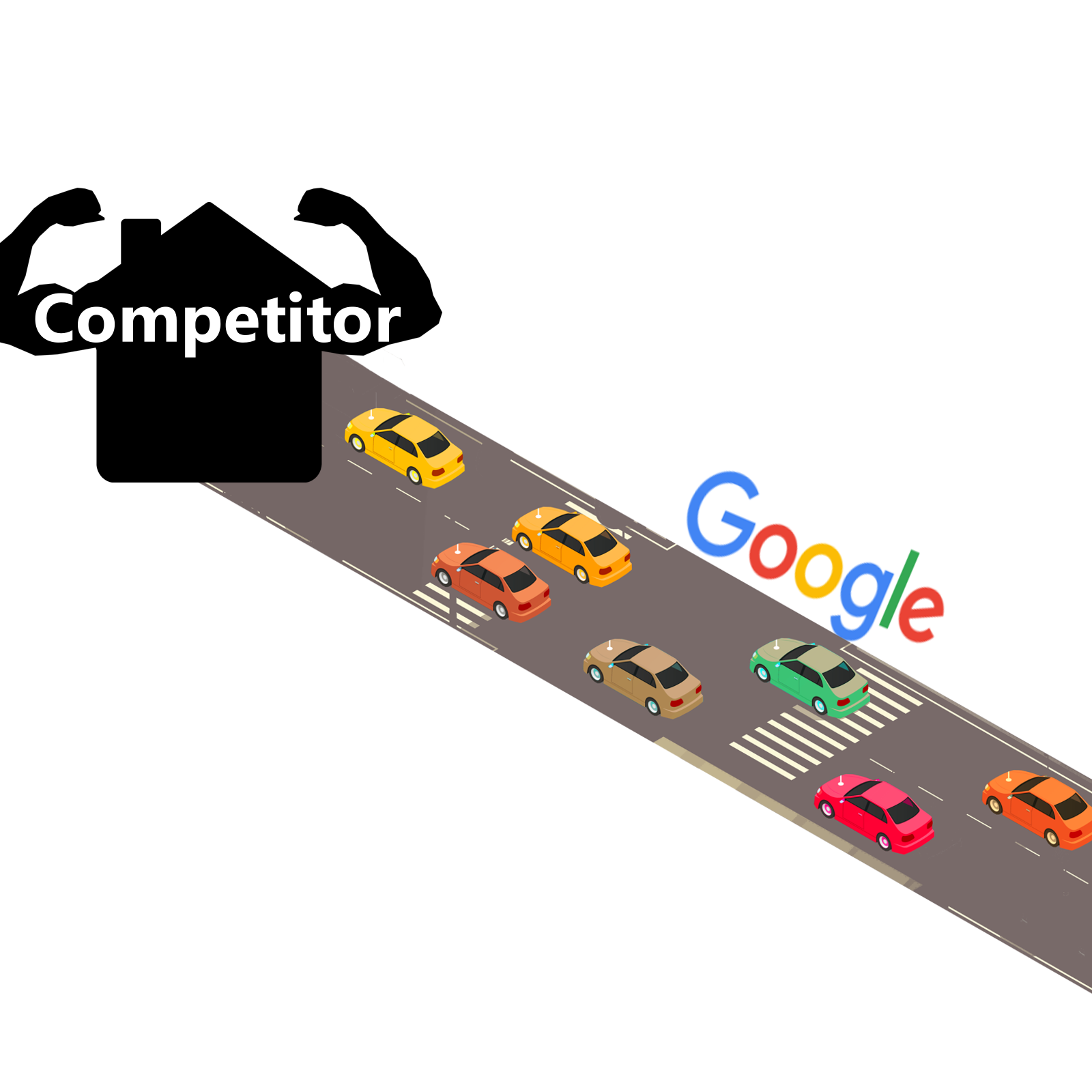
If you can convince Google’s search algorithms that you should be the one receiving that traffic. Then you can connect with these people, build a relationship, and guide them to your work. And do it all while you sleep, by leveraging your media (podcasts, videos, articles).
Most people think SEO is just adding the right keywords to your titles and content. That couldn’t be further from the truth. SEO is a multiplayer game where you’re battling with others over the fate of huge amounts of search traffic.
If you win, you get a bunch of free traffic and exposure to yourself and your business. If you lose (or refuse to play), your competitors get all those eyeballs.
I’m gonna cover the rules of this game, so you know what to do, and save a ton of time getting started.
But wait..does your Podcast and industry even have search traffic to fight over? How difficult will it be to win that traffic?
These are essential questions to ask before we even bother talking about the HOW. You don’t wanna waste your time learning a skill that won’t produce results for you.
Finding Search Terms Worth Fighting Over

If SEO is a war, then you’ve gotta pick the battles you want to fight.
The most important concepts you’ve gotta know are ‘keyword’ and ‘keyword difficulty’.
Keywords are the terms people are searching. Each keyword has a “search volume”, which is the number of people typing it into Google each month
Keyword difficulty is how intense the competition is over the keyword.
Many of the short and generic keywords are a bloodbath. There’s a ton of competition there, and it’s not where you should start.
Long tail keywords are variations of a generic keyword. They have less traffic but are easier to rank for.

Graphic 3: Everyone’s attention is on the high traffic keywords. Not much attention is on long tail keywords, which still add up to a lot of traffic.
Bundling a bunch of long tail keywords together can be a great way to get fast results with SEO.

Graphic 4: The first two keywords have a lot of monthly searches, but are difficult to rank for. The second two have less monthly searches, but are much easier to rank high for.
If you can be the first search result for a keyword, there’s a strong chance you capture 90% of the traffic.
There are online services that help you find keywords and check how hard it is to rank for them.
I recommend using a free trial from a powerful SEO tool like Semrush to collect this data. Use their ‘magic keyword tool’ to explore keywords, and see what your potential traffic and competition looks like.
As a first step, find an easy keyword with moderate search volume. And use it to practice SEO and gain some experience.
Even if you manage to spot a bunch of keywords with enough traffic. It’s not enough to add the keyword a few times to your titles and content. Winning a keyword is much more complicated than that.
Winning Search Traffic
Winning search traffic is about satisfying searchers. Searchers have a question, and Google rewards those with the best answer.
Or at least that’s what Google would have us believe.
The truth is that Google and some marketers have been in an arms race over the Search algorithm. Marketers trying to exploit the search algorithm, and Google trying to stop them.
This has turned SEO into a game. And the rules of the game depend on whether you’re trying to get videos or articles to be highly ranked.
Getting a Video Highly Ranked:
Google owns Youtube. So I’m going to use Google and Youtube interchangeably. Since they’re the same thing.
Google ranks a video if:
- The keyword is Present: The keyword (or a phrase very similar to it) is in your video title
- Has High Thumbnail Click Through: Your thumbnail needs to be clicked at a high rate
- Has High Viewer Retention: Your video is holding searcher’s attention for most of your video
- Searchers find what they want: They don’t click on the back button to look at more results.
If your video does better than others in these areas, YouTube/Google will rank it higher in searches.
The practical questions to ask yourself, which’ll lead you to rank better on average are:
Is your video ‘snackable’?
Searchers may be hesitant to click on an hour long Podcast to answer their question.
To repurpose longer form content, it may be a good idea to break it up into segments which answer a specific question.
Does your video bring searchers down into a rabbit hole?
As much as Google wants searchers to be satisfied, it wants Ad revenue even more. And Google serves more Ads the longer a searcher watches videos.
If you can bring searchers down into a rabbit hole of your own videos, it shows
- 1) You satisfied search intent, since the viewer didn’t click the back button and
- 2) You retained the viewer on your channel for a long time, meaning Google has made more money off them.
At that point, Google would be losing out if they didn’t show your video high in the search results.
Does your video have a call to action?
Once you’ve satisfied searchers, you’ve done a ton of work building value and trust with them.
Don’t waste that work by forgetting to call them to
- Subscribe,
- Go to another video, or
- Join your mailing list.
Whatever mechanism will give you the best chance of engaging them further with you and your work.
Getting an Article Highly Ranked
Google ranks an article if:
- The Keyword is Present: The keyword (or a phrase very similar to it) is in your video title
- Has quality, relevant Backlinks: where another website has linked to your website. Google uses these as signals to tell how credible, relevant and valuable your site is.
- Has High Search Click Through: Your search result is clicked at a high rate when seen. That’s a positive signal to Google when combined with.
- Searchers find what they want: They don’t click on the back button to look at more results.
If your article does better than others in these areas, Google/Bing will rank it higher in searches.
The practical questions to ask yourself, which’ll lead you to rank better on average are:
How quality and relevant are your backlinks?
Having ‘quality’ backlinks means that sites with alot of authority have linked to you. High authority site are often established businesses, popular blogs, news websites, schools, etc.
Having ‘relevant’ backlinks means sites which are an authority in the topic have linked to you.
- For e.g. if the keyword is ‘real estate podcasts’, and a popular real estate blog has linked to you. It’s more valuable than if a popular dropshipping blog linked to you.
Generally you can ‘build’ links to your website/article by either:
1) Paying for them: Which I highly discourage, since Google could penalize you if it finds out.
2) Building them yourself by:
- Contacting websites that are looking for guest posters. Writing content for them, and usually they’ll let you include a link or two to your own content.
- Earning press/blog coverage of your business or some content/event you’re putting out.
- Being a guest on a Podcast or Blog which routinely links to people’s sites.
- Etc.
How consumable is your content?
Searchers want an easy to read, well organized article. With pictures and videos to explain things visually. And information that deeply answers what the searcher wants to know.
Does your article take them down a content rabbit hole?
If the searcher clicks on your article, finds an interesting link and clicks on a second article. That’s a great sign for both you and Google.
This means searchers aren’t clicking on the back button. So in Google’s eyes, you’re satisfying the searcher.
You’re building a ton of value and trust with this reader. Which could result in them becoming a fan. But that’s only if you call them to action!
Does your article call the searcher to action?
Don’t waste all the work you just did by forgetting to call them to join your mailing list. Or whatever mechanism will give you the best chance of engaging them further with you and your work.
Winning the SEO battle can be a ton of work, and alot to remember.
That’s why it’s important to arm yourself with tools to help do all this work faster/more reliably.
Here’s a brief summary of the best tools, (mostly free) which have saved me a ton of time doing SEO right.
Tools Which Give you an SEO Advantage
Basic Tools:
- WordPress (free and paid): WordPress is a website, and blog hosting company. It’s hosts 43% of the internet. And that’s why some of the best SEO tools are build around it.
- If your main website is hosted on another platform. You can setup a ‘blog.<insert your website>.com’ subdomain which is hosted on WordPress.
- If fact that’s how this very website works. blog.podmate.io is hosted on WordPress. While podmate.io is hosted on another service.
- YoastSEO (free and paid): This is a beast of a tool that checks your content to make sure you’re getting the most out of SEO. Tiny technical details can make or break your SEO effort. So it’s really valuable to have a tool like this checking your work.
- This tool is built inside WordPress.
- Google Search Console (free): This tool is made by Google to make sure your website can be read by Google. If Google can’t read/reach your articles, it’ll never put them into the Search Engine results. So this is a really valuable tool.
- Google Keyword Planner (free): This helps you identify good search keywords for free! It tells you how many searches per month on a keyword, and how difficult it might be to rank highly for it.
After You’ve Gotten Started:
- Google Analytics (free): This is an essential tool to give you insights on how much traffic you’re getting. It also tells you which of your articles are performing well, and what keywords you’re doing well on.
- This isn’t critical at the beginning because most website hosts have analytics built in. But Google Analytics can give you info about what search keywords you’re doing well on.
- HemingwayApp (free): Clear, easy to understand content is the backbone of SEO. This tool is makes sure your script/article is written in simple and easy to understand language.
For Advanced Users:
- Semrush/Ahrefs (Paid): These are tools for SEO power users. They cost more than $100/month but have hundreds of thousands of marketers paying for them. That’s because the insight they give you on competitor and your own SEO efforts is unparalleled.
- You can see
- What websites have linked to your competitors?
- What keywords your competitors are doing well on?
- What websites are good targets to help you build links to your own website?
- What are keywords that are
- You can also track every aspect of your website’s SEO performance over time.
- You can get this information during a free trial period and cancel before you get charged. That’s the way I’d recommend you start.
- Once your SEO is delivering real results, these tools can take you to the next level..
- I’ve historically used Semrush myself, but both are strong tools.
- You can see
Good luck and happy SEO’ing.
Credits:
Sun Tzu <a href=”https://www.vecteezy.com/free-photos/sun-tzu”>Sun Tzu Stock photos by Vecteezy</a>
road – <a href=”https://www.freepik.com/free-vector/smart-city-traffic-isometric_5972706.htm#fromView=search&page=1&position=4&uuid=bd45fffb-36f8-4ede-b668-b57f0b23ae16″>Image by macrovector on Freepik</a>
houses – <a href=”https://www.freepik.com/free-vector/house-outline-glyph-style_41193811.htm#fromView=search&page=1&position=1&uuid=eb340c27-fde3-4984-9944-09fba80f004d”>Image by juicy_fish on Freepik</a>
Eyeballs <a href=”https://www.freepik.com/free-vector/different-eyes-icon-collection_869805.htm#fromView=search&page=1&position=15&uuid=3a200e42-d367-43fb-b6d1-2dbc217068e2″>Image by alvaro_cabrera on Freepik</a>
Leave a Reply